Over the past several years, Australian businesses have weathered an unusually intense run of disruptive events floods across multiple states, bushfire seasons that closed entire regional economies for weeks, and supply chain disruptions that left businesses waiting months for stock that once arrived in days. Each of these events has produced the same hard lesson, repeated across different industries: the damage that closes a business is rarely the physical damage itself. It's the income lost while recovering from it.
The Gap Most Businesses Don't See Coming
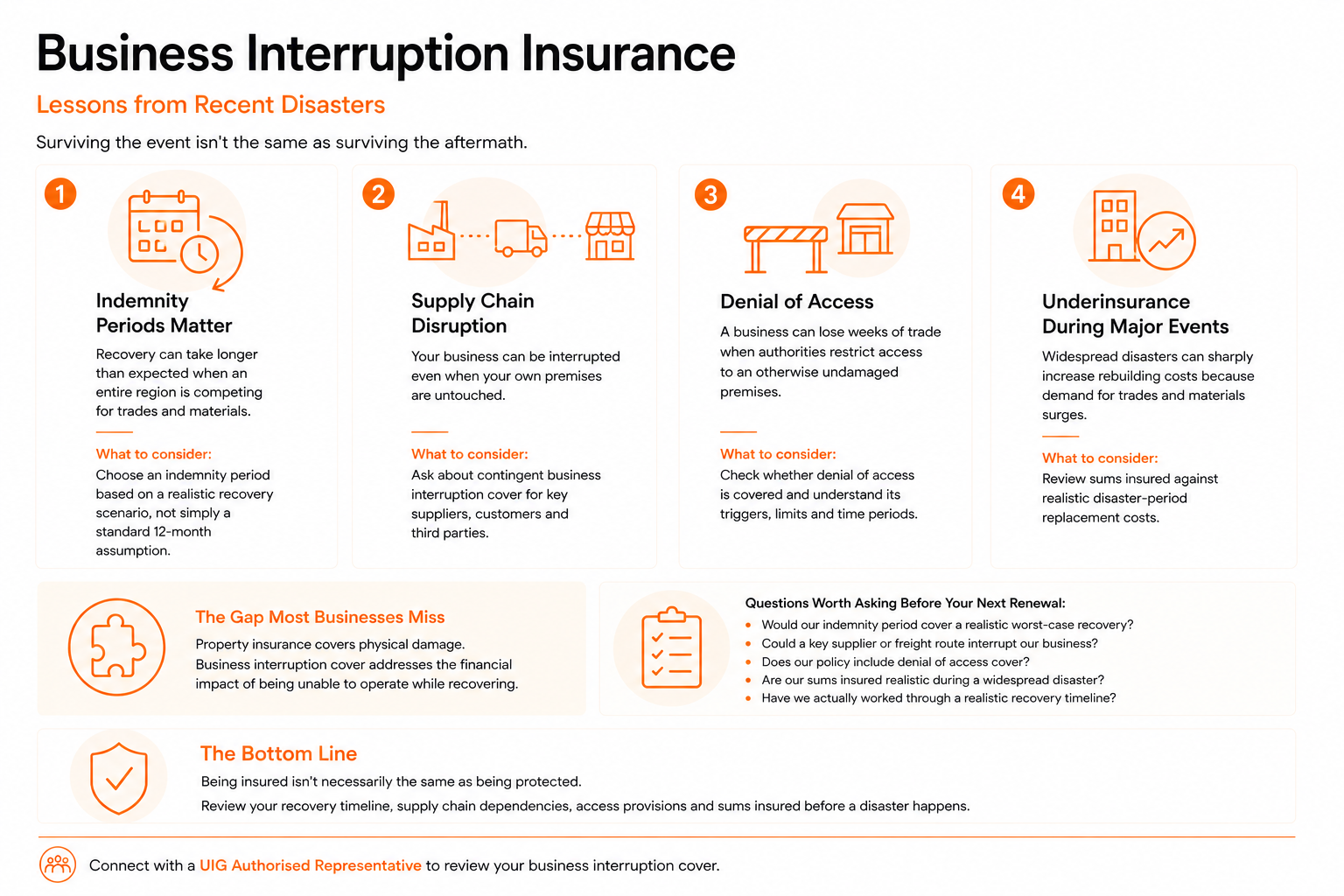
Property insurance is designed to answer one question: what does it cost to repair or replace what was damaged? Business interruption insurance answers a different, equally important question: what does it cost the business to not be operating while that repair happens?
For many small and medium businesses, the second number is larger than the first and yet it's the one most commonly underinsured or overlooked entirely.
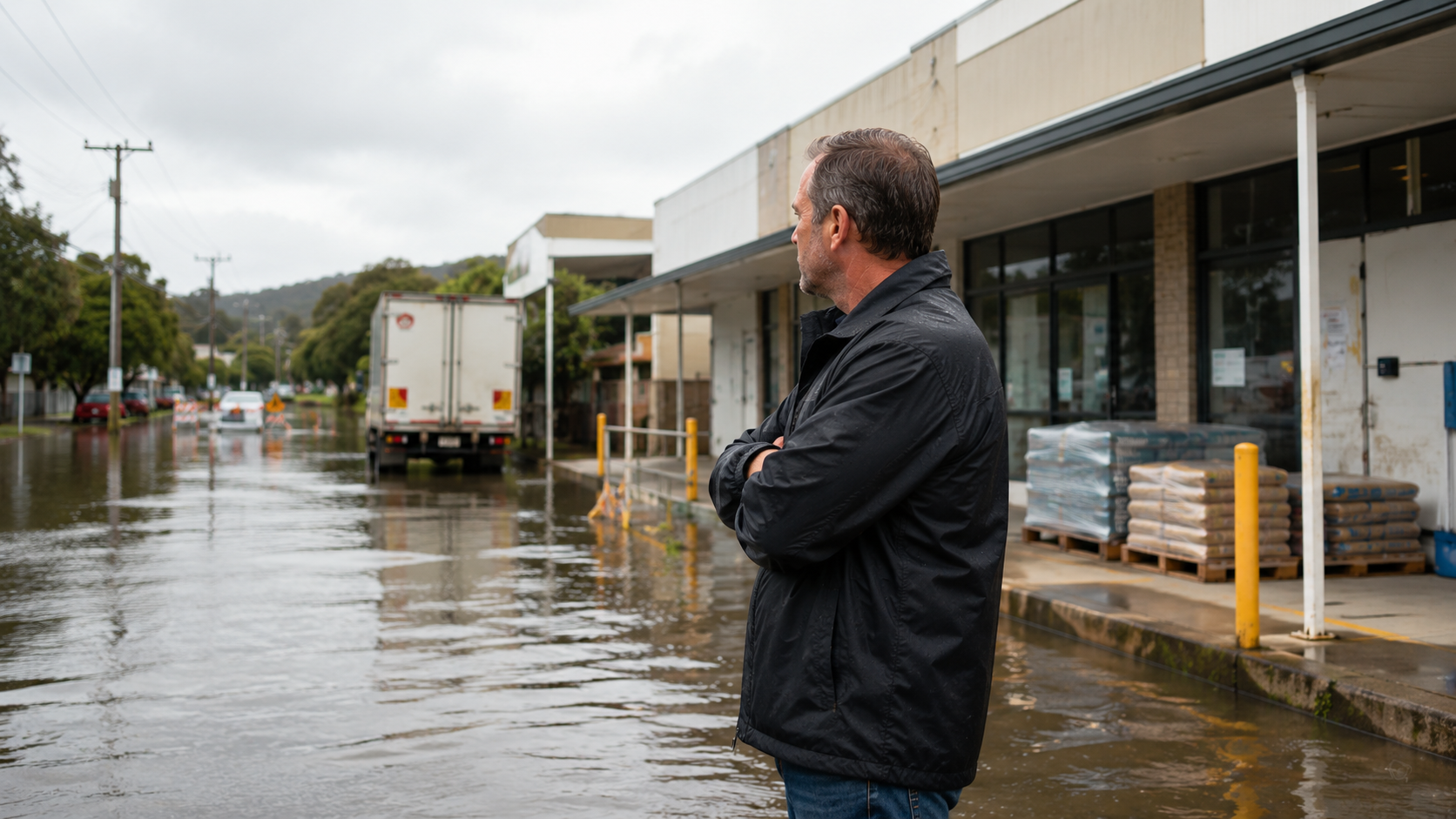
Consider a retail business affected by regional flooding. The physical stock and fittings might be fully covered and replaced within weeks. But if the surrounding area is inaccessible for months, or the customer base has permanently shifted their spending elsewhere during the closure, the real financial damage extends well beyond the reopening date often past the point where the policy's cover period runs out.
Lesson One: Indemnity Periods Matter More Than People Think
Business interruption policies specify an "indemnity period" the length of time the policy will pay out for lost income following a covered event. Many businesses select a standard 12-month period without carefully considering how long a genuine recovery would actually take for their specific circumstances.
Recent disasters have shown that recovery timelines are frequently longer than expected particularly when rebuilding requires trades and materials that are also in high demand across an entire disaster-affected region, extending timelines well beyond what a business would face in an isolated, unrelated incident.
The lesson: when selecting an indemnity period, consider not just how long it would take to rebuild your own premises, but how long it might take in a scenario where every other affected business in the region is competing for the same limited trades and materials.
Lesson Two: Supply Chain Disruption Can Close You Down Without Touching Your Premises
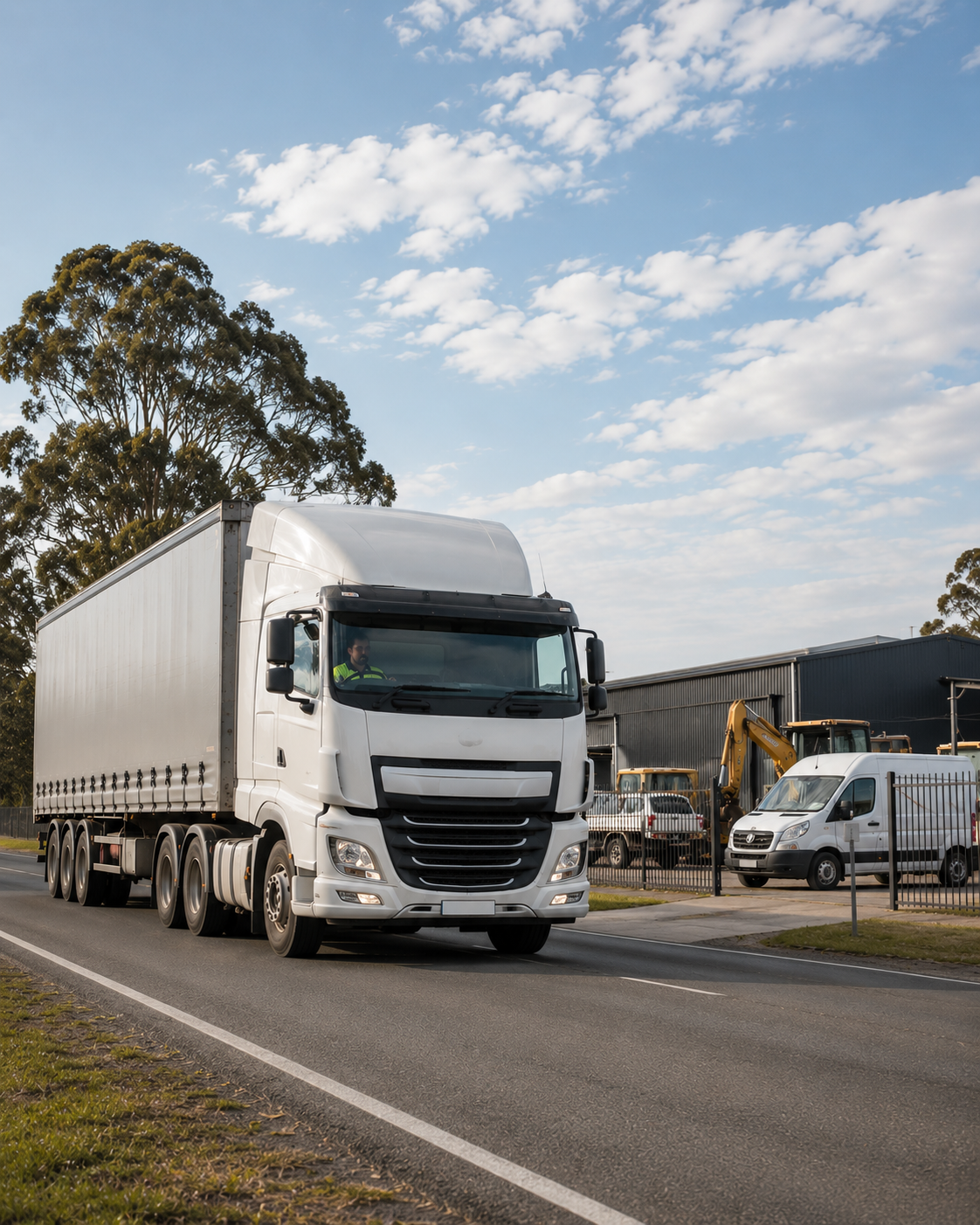
Some of the most damaging interruptions in recent years didn't involve any direct damage to the affected business at all they involved a key supplier, freight route, or manufacturing partner being disrupted, leaving the business unable to trade even though its own premises were untouched.
Standard business interruption cover typically responds to damage at your own premises. Contingent business interruption extensions often available but not always included by default extend cover to interruptions caused by damage to a supplier, customer, or specified third party.
The lesson: if your business depends heavily on a small number of key suppliers or a single freight route, ask your broker specifically about contingent business interruption cover, rather than assuming standard cover extends that far.
Lesson Three: Denial of Access Events Are More Common Than Expected
Several recent disasters closed businesses not because of direct damage, but because authorities restricted access to an affected area for safety reasons a scenario often called "denial of access." A business with an intact, undamaged premises can still lose weeks of trade if the surrounding area is cordoned off during an emergency response.
The lesson: confirm whether your policy includes denial of access cover, and understand the specific triggers and time limits that apply, since these vary meaningfully between insurers.
Lesson Four: Underinsurance Compounds During Widespread Events
During large-scale disasters affecting many businesses simultaneously, underinsurance becomes a much bigger problem than in an isolated single-business loss. Rebuilding costs spike due to sudden regional demand for the same trades and materials, meaning a sum insured that looked adequate before the event can fall well short of actual rebuilding costs during it.
The lesson: review your sums insured with an awareness that costs can rise sharply during a widespread event, not just gradually over time through ordinary inflation.
What This Means for Your Business Today
None of these lessons require a recent disaster to have personally affected your business to be relevant. The pattern is consistent enough across recent events that it's worth treating as a genuine planning input, not just a reaction to bad luck elsewhere.
A conversation with your broker about indemnity periods, contingent cover, denial of access provisions, and realistic sums insured before an event, not after one is the single most effective way to close the gap between "insured" and "actually protected."
Want to review whether your business interruption cover reflects a realistic recovery scenario? Connect with a UIG Authorised Representative.
A Realistic Example
A regional manufacturing business survives a flood with its premises largely intact, thanks to sandbagging and an elevated production floor. But the road into town is closed for six weeks under a denial of access order while authorities clear debris and assess infrastructure. The business loses six weeks of trade despite suffering almost no direct property damage and discovers, only when lodging a claim, that its policy's denial of access provision caps payouts at a lower limit than its standard business interruption cover. The lesson arrives at the worst possible time: during the claim, not before it.
Questions Worth Asking Before Your Next Renewal
- If a widespread disaster affected our entire region, would our indemnity period realistically cover the time it takes to rebuild amid competing demand for trades and materials?
- Do we rely on a small number of key suppliers or a single freight route that could interrupt us without any direct damage to our own premises?
- Does our policy include denial of access cover, and do we understand its specific triggers and limits?
- Have we reviewed our sums insured with an awareness that costs spike sharply during large-scale regional events, not just gradually over time?
- Has anyone actually walked through a realistic worst-case timeline with us, rather than assuming a standard 12-month indemnity period is automatically enough?
Recent disasters have been expensive teachers for the businesses that lived through them. The businesses that come out ahead going forward are the ones willing to learn the same lessons in a broker conversation, rather than during a claim.