Running a small business means juggling a hundred priorities at once cash flow, staffing, customers, compliance. Insurance often gets treated as a box-ticking exercise: get public liability, maybe some contents cover, and move on. The problem is that the risks most likely to actually damage a business rarely show up on the obvious list.
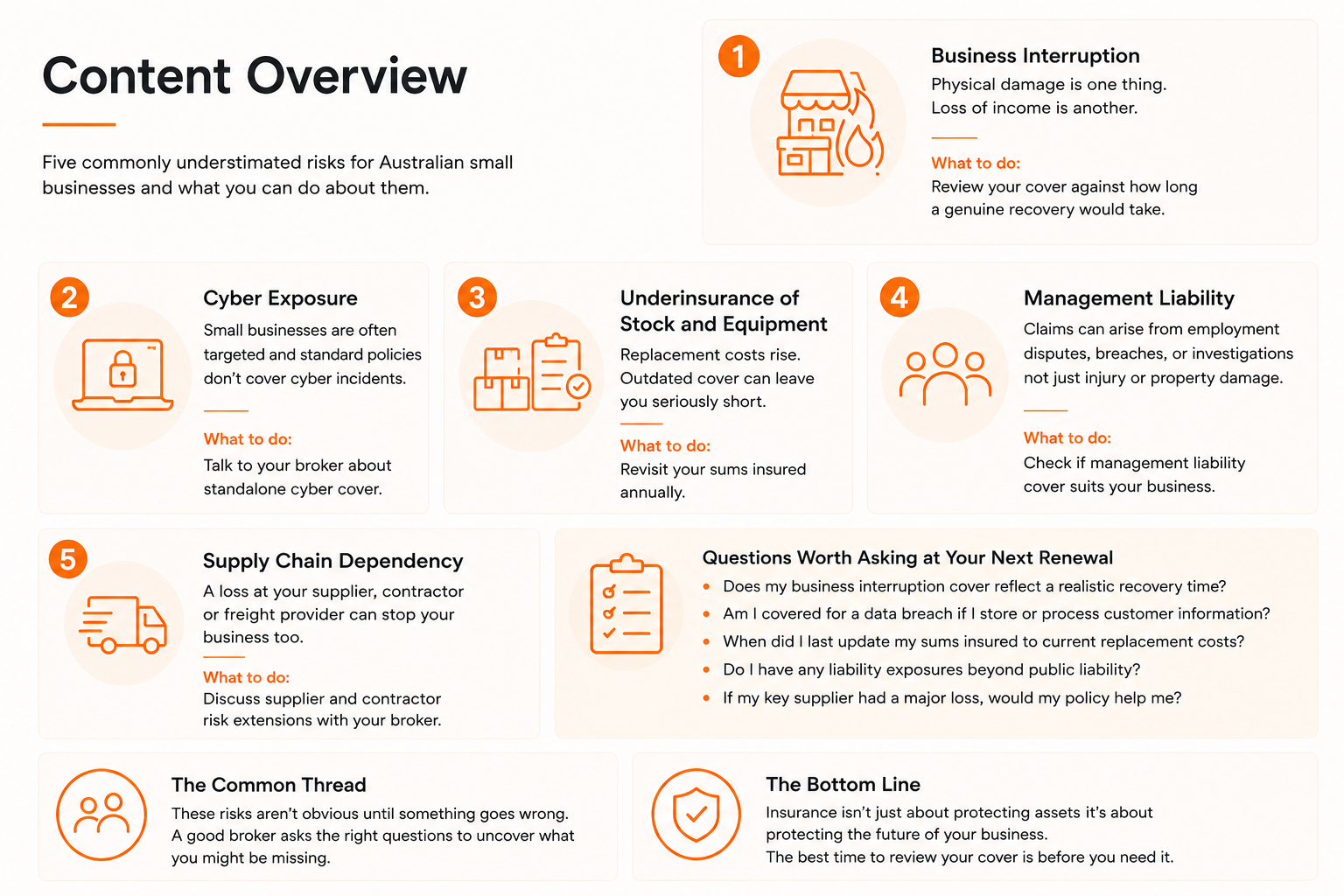
Here are five risks Australian small business owners consistently underestimate and what to do about each one.
1. Business Interruption
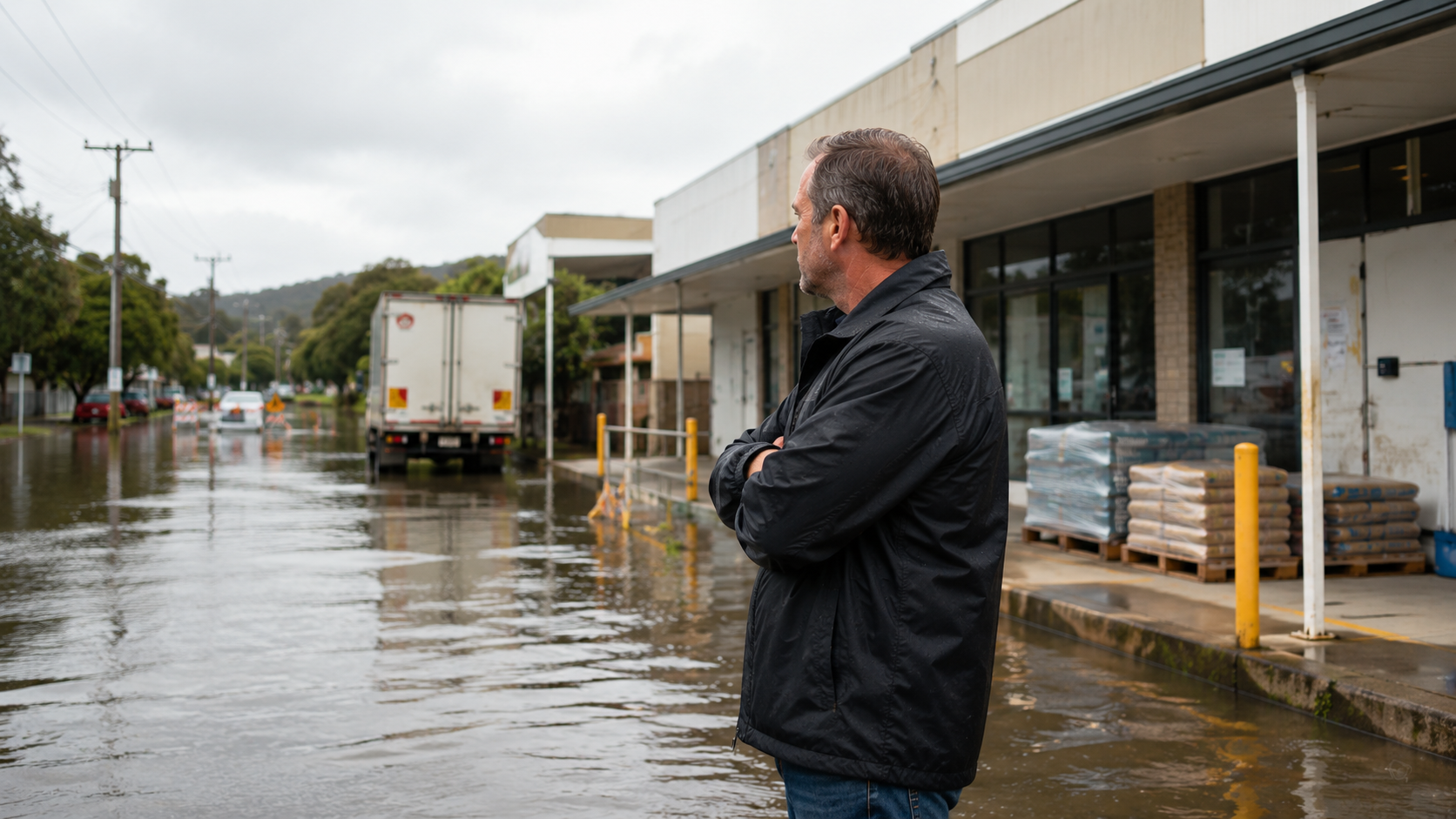
Most owners insure their physical assets the shopfront, the stock, the equipment but forget to insure the income those assets generate. If a fire, flood, or burst pipe shuts your doors for three months, your property policy might pay to rebuild the premises, but it won't replace the revenue you didn't earn while you were closed.
Business interruption insurance covers exactly that gap: lost income, ongoing fixed costs like rent and wages, and sometimes even the cost of operating from a temporary location while repairs happen. For many small businesses, especially those with tight margins, this is the difference between reopening and closing for good.
What to do: Review your sum insured for business interruption against how long a genuine rebuild or recovery would realistically take not the optimistic estimate, the honest one.
2. Cyber Exposure
"We're too small to be a target" is one of the most common and most incorrect assumptions small business owners make. Cybercriminals don't discriminate by size; in fact, smaller businesses are often targeted precisely because they have weaker defences than large corporates, while still holding valuable customer data, payment details, or access to larger supply chains.
A single ransomware incident or data breach can mean weeks of disruption, regulatory notification obligations, reputational damage, and direct financial loss costs that standard business insurance typically does not cover.
What to do: Talk to your broker about standalone cyber cover, even if your business feels "too small" or "too offline" to need it. If you take any form of digital payment or store any customer information, you're exposed.
3. Underinsurance of Stock and Equipment
Replacement costs rise every year sometimes sharply, as many businesses discovered during recent supply chain disruptions. A sum insured that was accurate three years ago may now leave a significant gap between what you'd receive in a claim and what it actually costs to replace your stock or equipment today.
This is one of the most common and most preventable causes of a business being left short after a genuine loss.
What to do: Revisit your sums insured annually, not just at renewal by default. If your industry has seen input cost inflation, your policy should reflect that.
4. Management Liability
Many small business owners assume liability insurance only matters for larger companies with complex corporate structures. In reality, even a two-person business can face a claim relating to an employment dispute, an alleged breach of duty, or a regulatory investigation and public liability insurance won't cover any of it, because those are management and governance risks, not third-party injury or property damage risks.
What to do: Ask your broker whether management liability cover makes sense for your business structure particularly if you employ staff, sit on any external boards, or handle sensitive contracts.
5. Supply Chain Dependency
If your business relies heavily on a single supplier, freight provider, or key contractor, you carry a risk that often isn't visible until it materialises: what happens if they have a loss, not you? A supplier's fire, a freight delay, or a contractor's insolvency can interrupt your business just as badly as a loss on your own premises but many owners never think to ask whether their policy accounts for this kind of dependency.
What to do: Talk through your key supplier and contractor relationships with your broker. Some business interruption policies can be extended to cover disruption caused by a supplier's loss, not just your own.
The Common Thread
Every one of these risks shares the same root cause: they're not obvious until something goes wrong. A good broker's job isn't just to find you a competitive price on the cover you already know you need it's to ask the questions that surface the risks you haven't thought of yet.
If it's been a while since your policy was reviewed against how your business actually operates today, that conversation is worth having before renewal, not after a claim.
Unsure if your business has the right protection? Connect with a UIG Authorised Representative for a free risk assessment.
A Realistic Example
Consider a small manufacturing business that suffers a workshop fire. The building is insured, so repairs get underway. But six weeks in, the owner realises the real cost isn't the building it's the six weeks of lost orders, the wages still owed to staff with no work to do, and the customers who've quietly moved to a competitor because they needed product on time. None of that was covered, because the policy only ever priced in property damage, not the income the property generated.
This is the pattern behind most of the risks above: the cost that actually threatens the business is rarely the one insured against by default.
Questions Worth Asking at Your Next Renewal
- Does my business interruption cover reflect how long a genuine recovery would take not the best-case scenario?
- If my business took payments online or stored any customer data, am I covered for a data breach?
- When did I last update my sums insured against current replacement costs, not historical ones?
- Do I have any personal or management liability exposure that a standard public liability policy doesn't touch?
- If my key supplier had a major loss tomorrow, would my policy help me, or just them?
None of these questions have a one-size-fits-all answer that's exactly why they're worth a real conversation with a broker who knows your industry, rather than a default renewal.