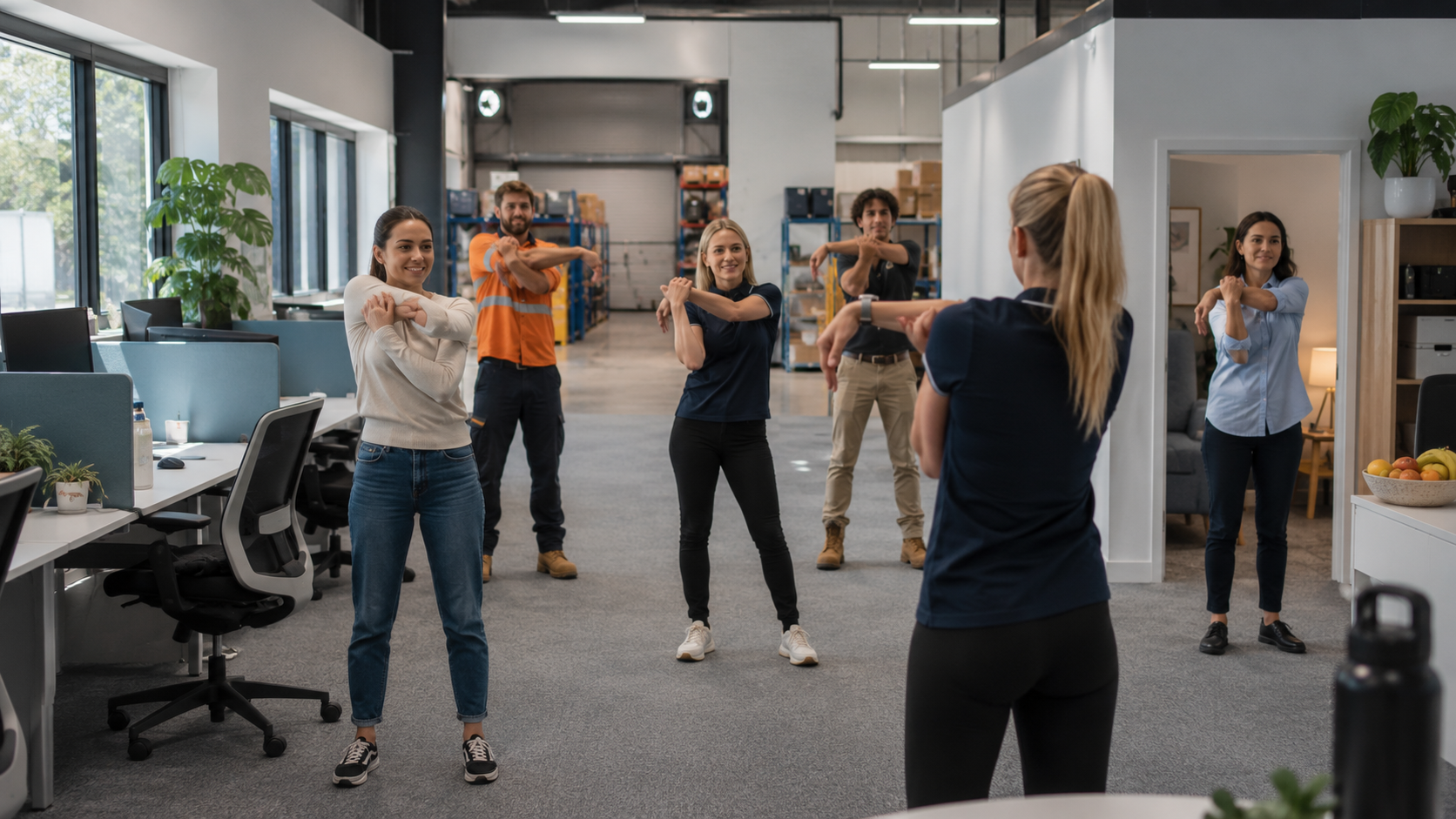
Employee health is usually framed as a wellbeing issue, separate from the harder business conversations around insurance, risk, and cost. In practice, the two are more directly connected than most employers recognise. A workforce in genuinely good health physically resilient, adequately rested, and supported through periods of stress presents measurably lower risk across several categories that directly affect a business's insurance experience over time.
The Direct Links Worth Understanding
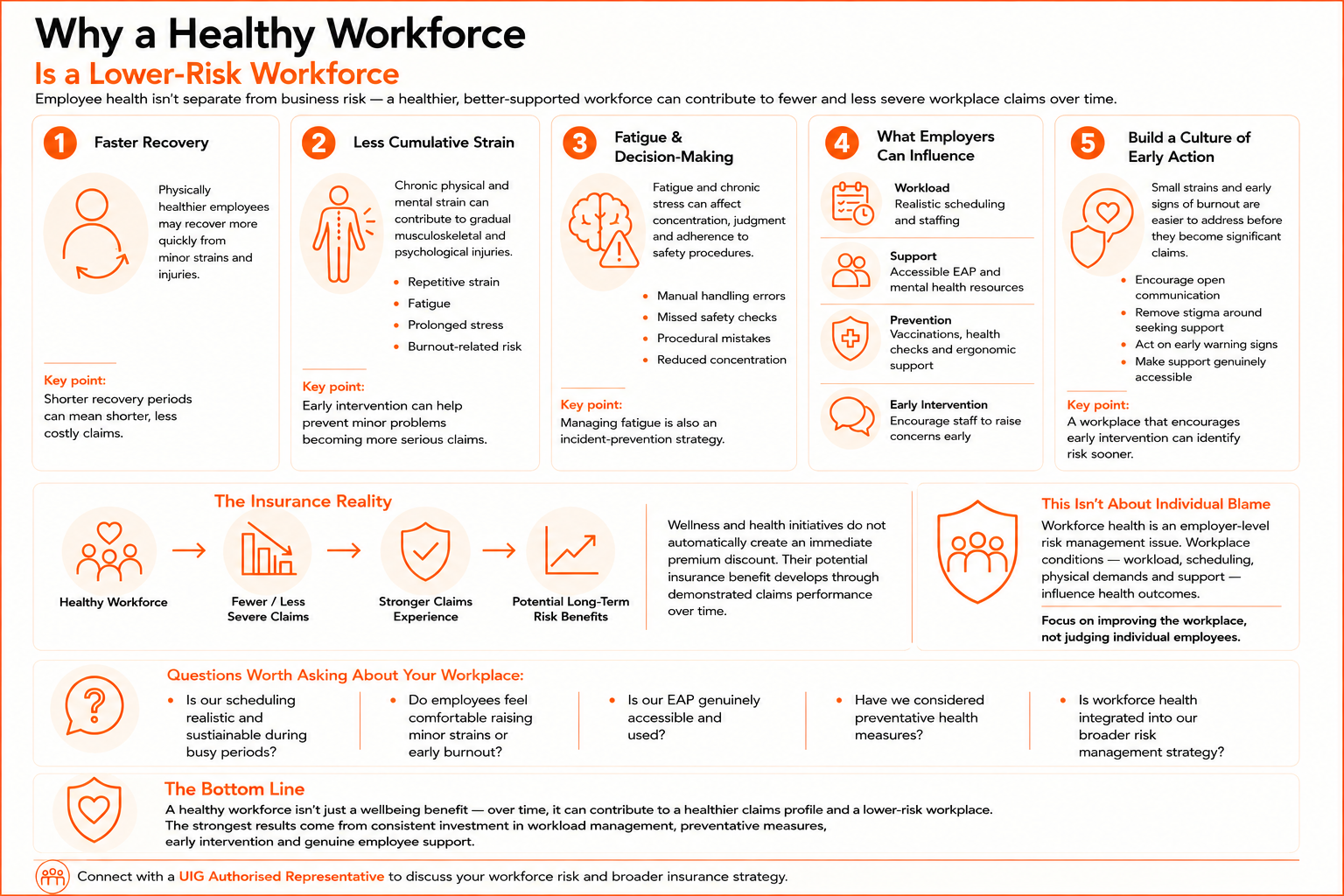
Recovery speed after minor incidents. A physically healthier employee generally recovers faster from a minor strain or injury than one already carrying unaddressed physical strain or fatigue. Faster recovery means shorter claims, and shorter claims generally cost less and affect claims experience less severely than prolonged ones.
Susceptibility to cumulative strain injuries. Employees under chronic, unaddressed physical or mental strain are more likely to develop the kind of gradual musculoskeletal or psychological injuries that tend to be more costly and complex than acute, single-incident claims.
Absence patterns and cover. A workforce with poor overall health management tends to show higher rates of both short-term absence and longer-term claims, both of which factor into how a business's overall risk profile is assessed over time.
Decision-making and error rates. Fatigue and chronic stress measurably affect concentration and decision-making. In physically or procedurally risky work environments, this translates into a higher likelihood of the kind of errors that lead to incidents whether that's a manual handling mistake, a missed safety check, or a lapse in an otherwise well-followed procedure.
This Isn't About Individual Blame
It's important to be clear about what this connection does and doesn't mean. The point isn't that individual employees are responsible for a business's insurance costs based on their personal health choices that would be both unfair and largely beside the point. The point is that workplace conditions workload, scheduling, physical demands, and support structures meaningfully shape workforce health outcomes, and those outcomes in turn shape claims experience. This is squarely an employer-level risk management question, not an individual-level one.
What Employers Can Actually Influence
Realistic scheduling and workload. Chronic understaffing or unsustainable rostering doesn't just create a poor working environment it directly increases fatigue-related error rates and slows recovery from minor strains that would otherwise resolve quickly with adequate rest.
Genuine, accessible support structures. An Employee Assistance Program that's actually used, rather than one that technically exists but carries stigma or is poorly promoted, contributes meaningfully to managing chronic stress before it becomes a claim.
Preventative health measures. Flu vaccination programs, basic health checks, and ergonomic support all contribute to a workforce that's less likely to experience the kind of gradual health decline that eventually surfaces as increased claims frequency or severity.
A culture that allows early intervention. Workplaces where staff feel comfortable raising a minor strain or early sign of burnout before it worsens consistently see better outcomes than workplaces where problems are only addressed once they've become serious enough to force time off.
The Insurance Reality
None of this means a workforce health initiative produces an immediate premium reduction insurers assess risk based on demonstrated claims experience over time, not on the existence of a wellness initiative in isolation. What it does mean is that businesses genuinely investing in workforce health tend to see, over a period of years, a gradual improvement in claims frequency and severity that eventually reflects in a more favourable overall risk profile the same pattern that applies to physical safety investment more broadly.
A Long-Term View
The businesses that benefit most from this connection are rarely looking for an immediate cost saving they're the ones treating workforce health as a genuine, ongoing part of how the business operates, in the same way they'd treat equipment maintenance or safety training. Over time, this consistent investment tends to compound into a workforce that's both healthier and, from a claims perspective, measurably lower risk.
Want to talk through how workforce health factors into your broader insurance and risk profile? Connect with a UIG Authorised Representative.
A Realistic Example
A distribution business runs consistently understaffed during a busy season, requiring existing staff to cover longer shifts with fewer breaks. Minor strains that would typically resolve within days under normal conditions instead linger, because staff are too fatigued and time-poor to properly recover between shifts. Several of these minor strains eventually develop into more serious claims, not because the physical work itself changed, but because the surrounding conditions inadequate rest, chronic fatigue prevented the kind of quick recovery that would otherwise have kept them minor.
Questions Worth Asking About Your Own Workplace
- Is our current scheduling realistic and sustainable, or does it rely on staff working through fatigue during busy periods?
- Do staff feel comfortable raising a minor strain or early sign of burnout, or do problems typically surface only once they've become serious?
- Is our Employee Assistance Program genuinely used, or does it exist mostly on paper with real or perceived stigma attached?
- Have we considered preventative measures like flu vaccination programs or basic health checks as part of managing overall workforce risk?
- Are we treating workforce health as an ongoing operational priority, or as a separate wellbeing initiative disconnected from how we think about risk?
A healthy workforce isn't just a nicer place to work over time, it's a measurably lower-risk one, and that connection is worth taking seriously as part of a genuine risk management strategy, not just a wellbeing initiative.